
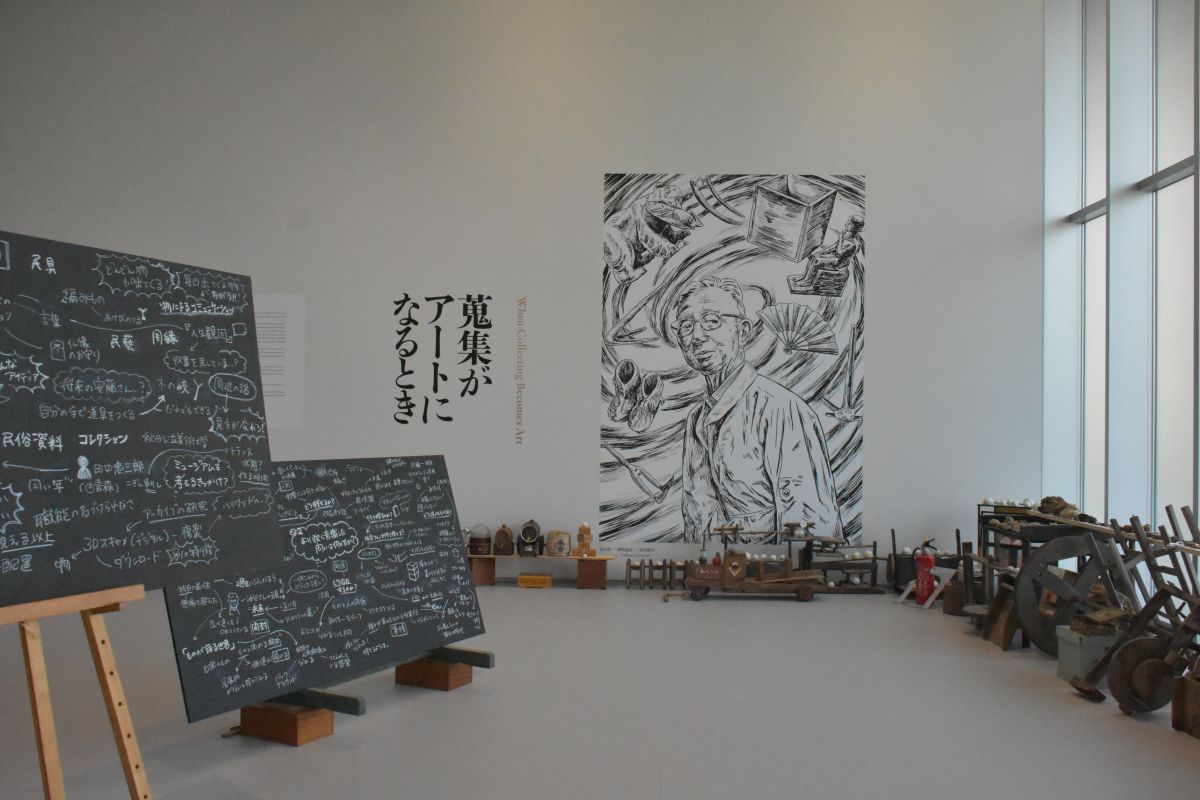
2026年7月25日(土)、京都市立芸術大学ギャラリー@KCUAにて、展覧会「蒐集がアートになるとき」が開幕しました。
本展の出発点となったのは、秋田県在住の蒐集家・油谷満夫さんが、70年以上にわたって集めてきた50万点を超える膨大なコレクションです。農具や生活用具、印刷物、玩具、機械類、用途のわからないものまで、その内容は多岐にわたります。
一見すると価値を見いだしにくいものや、整理・分類されていないものも含むこの資料群を、私たちはどのように受け止め、未来へ引き継ぐことができるのでしょうか。本展では、油谷さんの蒐集とその背景にある思想をたどるとともに、アーティストや研究者がコレクションに出会い、そこから立ち上げた作品や実践を紹介しています。
On Saturday, July 25, 2026, the exhibition When Collecting Becomes Art opened at the Kyoto City University of Arts Gallery @KCUA.
The starting point of this exhibition is the vast collection of over 500,000 items assembled over more than 70 years by collector Michio Aburaya, who lives in Akita Prefecture. The collection spans a wide range of objects, including agricultural tools, household implements, printed materials, toys, machinery, and items whose original purposes are no longer known.
How can we receive and pass on to the future such an archive—one that includes objects that may at first appear difficult to assign value to, and that has not been systematically organized or classified? This exhibition traces Aburaya’s practice of collecting and the ideas underlying it, while also presenting works and practices by artists and researchers who have encountered the collection and developed new forms of expression from it.
倉庫に眠っていたものを、展覧会場へ
会場の一角には、油谷さんの倉庫から運び出された未整理・未分類のものが並んでいます。
この展示のもとになったのは、2024年に秋田市文化創造館で始まった「1/1000油谷コレクション」。藤浩志は、倉庫の中に積み重ねられていたものを外へ出し、まずは一つひとつ並べてみることを提案しました。分類や評価を急ぐのではなく、もの同士の違いや関係を見つめるところから始める試みです。
京都の会場でも、名前や用途がわからないものを含む多種多様な品々が空間いっぱいに広がります。それらを眺めていると、これまで見過ごしてきた形や素材、使われた痕跡が、次第に目に入ってきます。
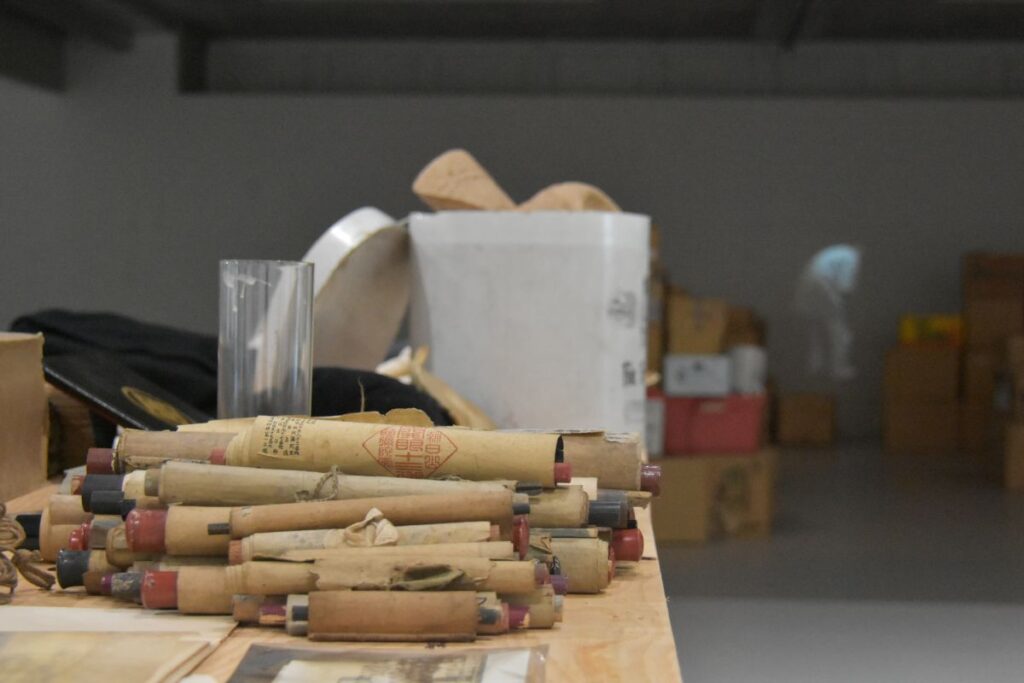
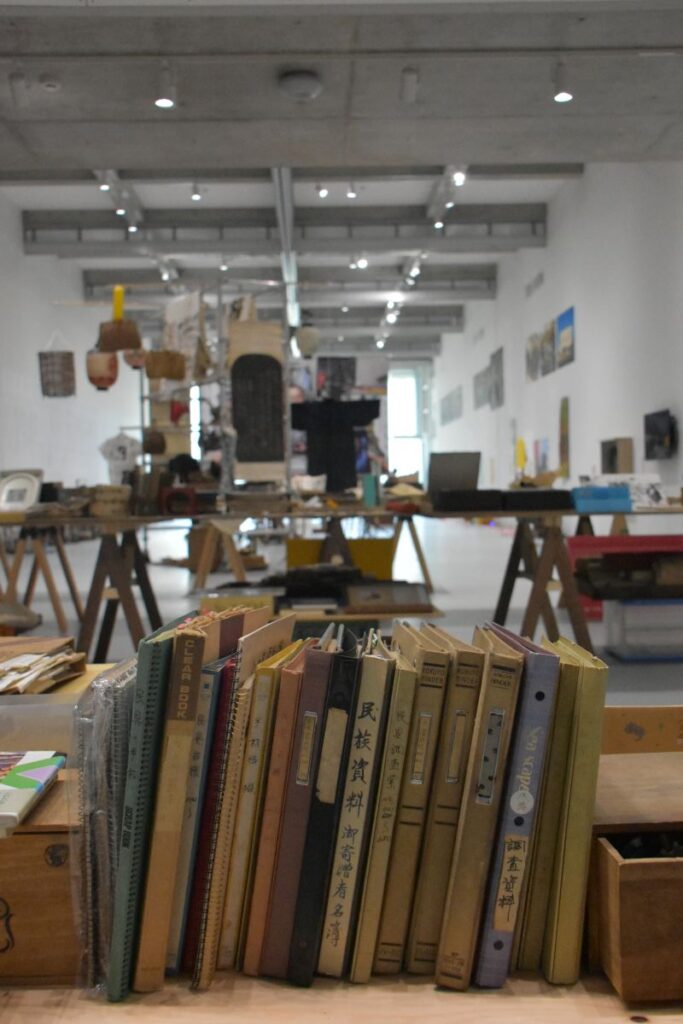
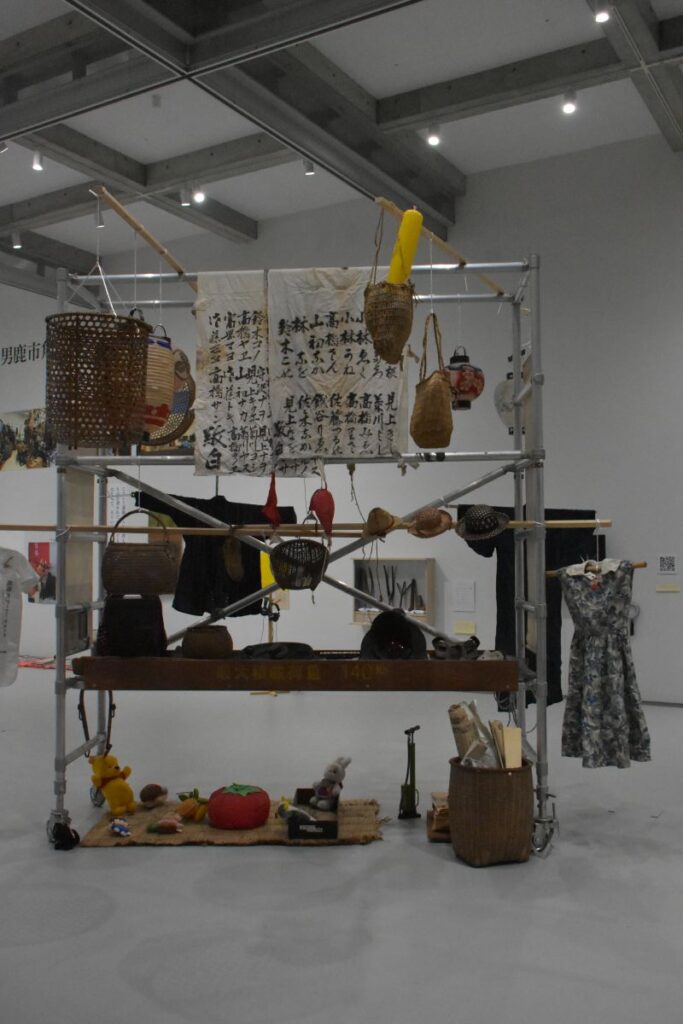
藤浩志ほか《1/1000油谷コレクション》、《油谷満夫が集めた資料群》
Hiroshi Fuji, et al. “1/1000 Aburaya Collection”
From Warehouse to Exhibition Space
In one corner of the venue, unorganized and uncategorized objects brought from Mr. Aburaya’s warehouse are on display.
This presentation originates from “1/1000 Aburaya Collection,” which began in 2024 at the Akita City Cultural Creation Center. Fuji Hiroshi proposed taking the objects that had been piled up inside the warehouse and bringing them outside, first simply laying them out one by one. Rather than rushing to classify or evaluate them, the project begins by observing the differences and relationships between the objects themselves.
At the Kyoto venue as well, a wide variety of items—including those whose names and uses are unknown—fill the space. As one looks at them, forms, materials, and traces of use that had previously gone unnoticed gradually come into view.
蒐集との出会いから生まれた、それぞれの表現
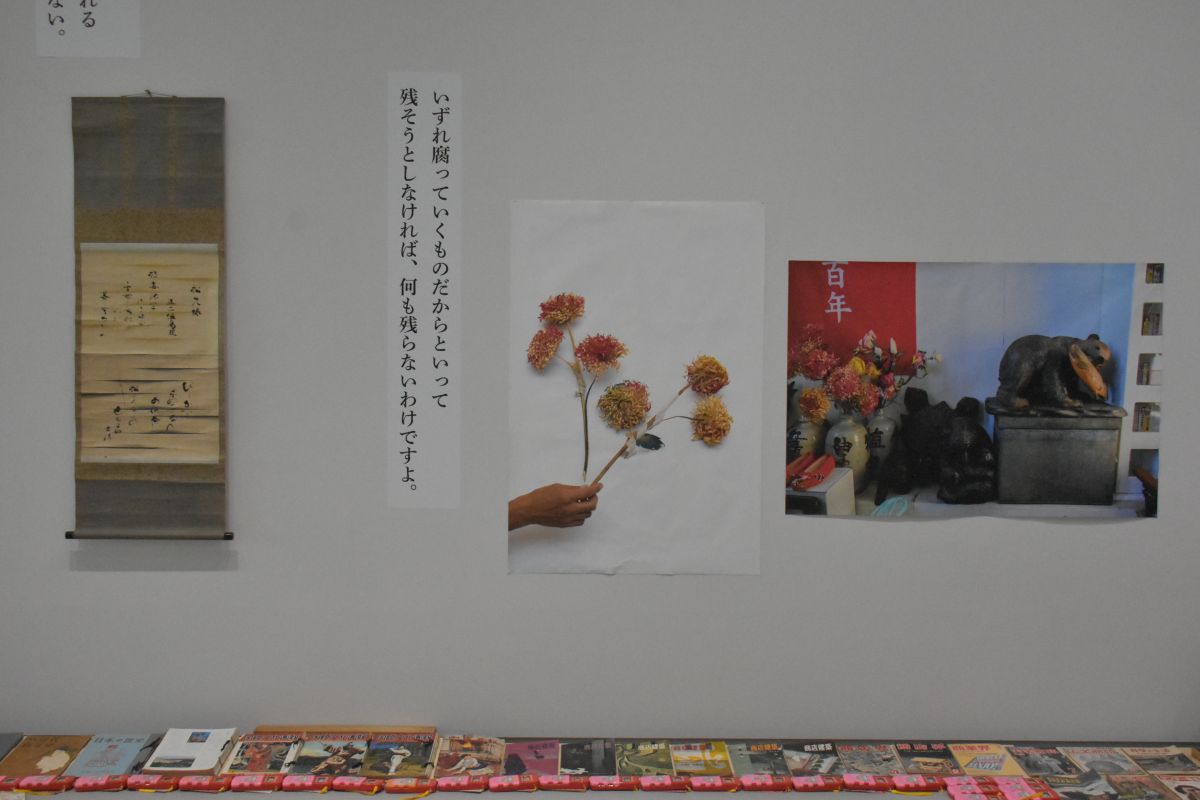
服部浩之は、2022年から10回以上にわたって油谷さんへのインタビューを重ねてきました。会場では、油谷さんの言葉や写真家の岩根愛が撮りおろした写真、蒐集の歩みを通して、一人の蒐集家の人生と、今日のミュージアムやアーカイブが抱える課題とを結びつけます。
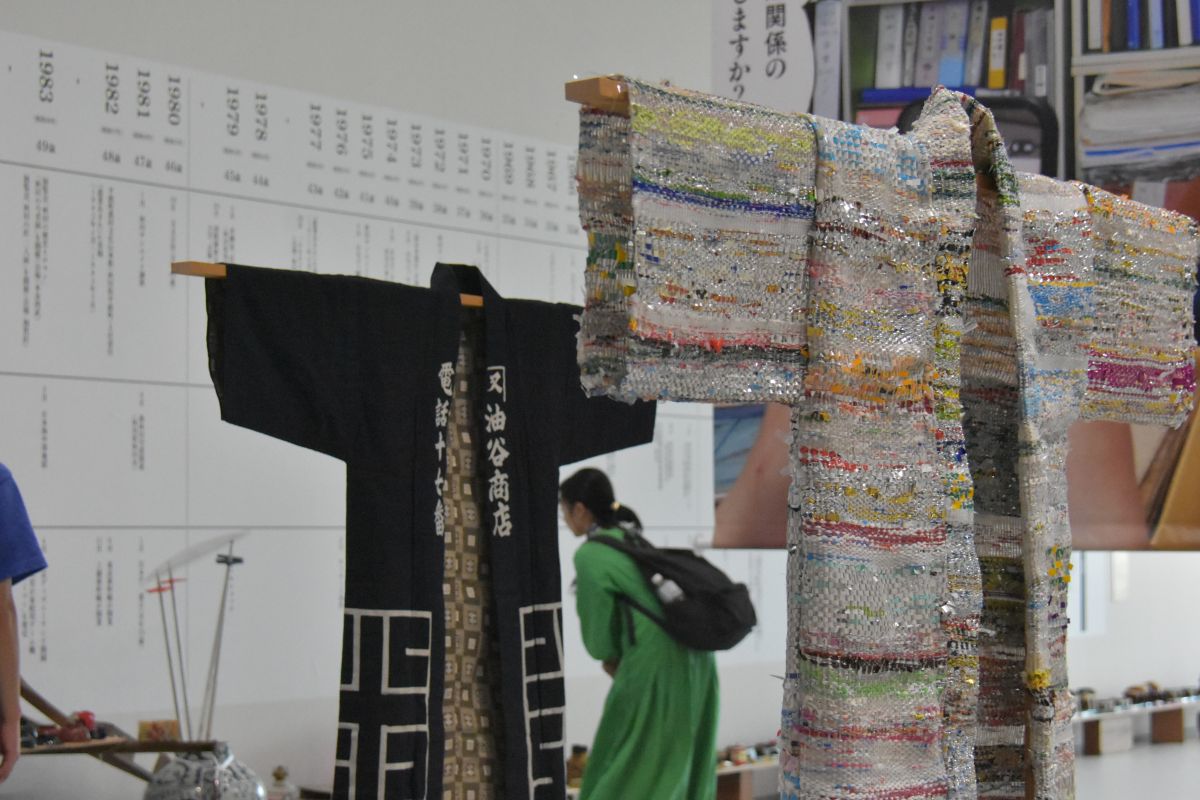
國政サトシは、「1/1000油谷コレクション」で出会った編組品に着目しました。自然素材を用いて編まれた生活道具を観察し、その技術や構造を現代の素材へと置き換えることで、かつての手仕事と現在の暮らしをつなぐ作品を制作しています。暮らしの中で廃棄されるプラスチック包装を素材に用い、さき織りの技法によって、油谷さんのご実家である米穀商・油谷商店の半天と同じ形状の半天を織り上げました。
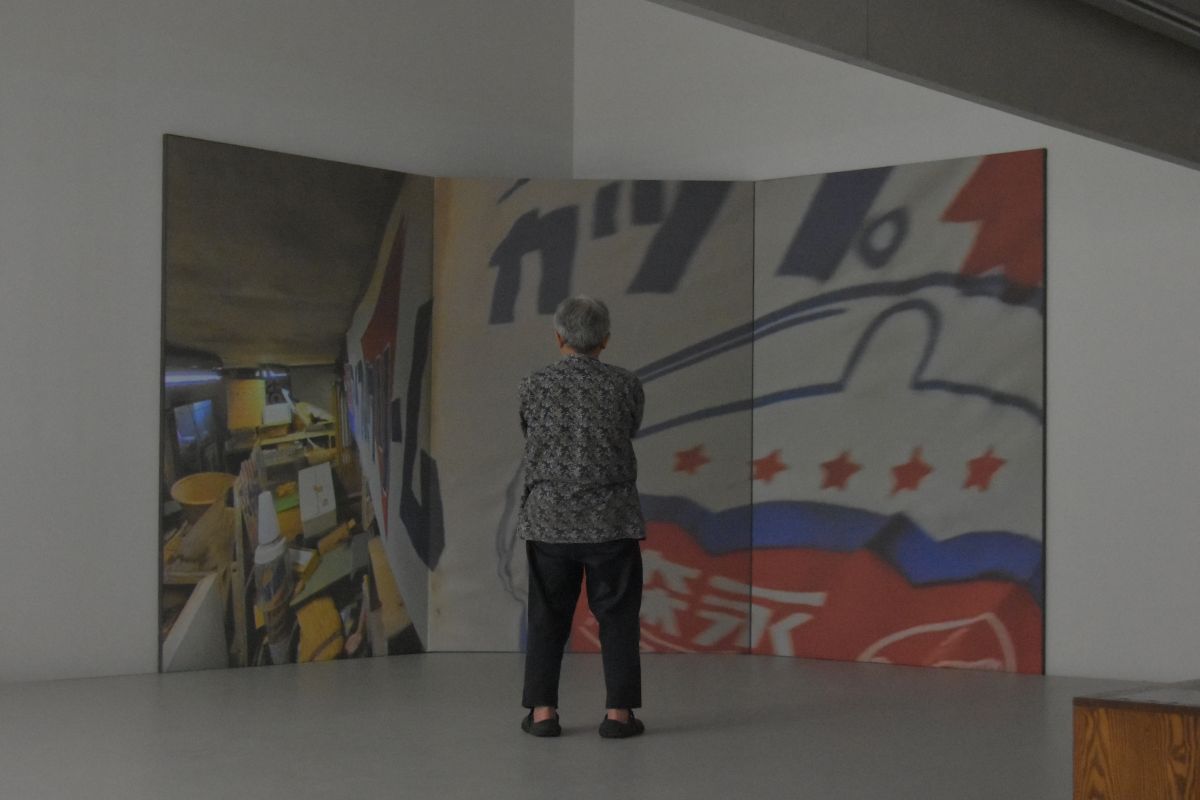
山岸耕輔と瀬戸彩花は、秋田にある油谷さんの倉庫を訪ね、その内部や、そこに収められた膨大なものを映像によって記録しました。映像には、倉庫の静けさや密度、ものに囲まれて過ごす油谷さんの時間が映し出されています。京都の会場にいながら、コレクションが置かれてきた場所の空気を感じることのできる作品です。
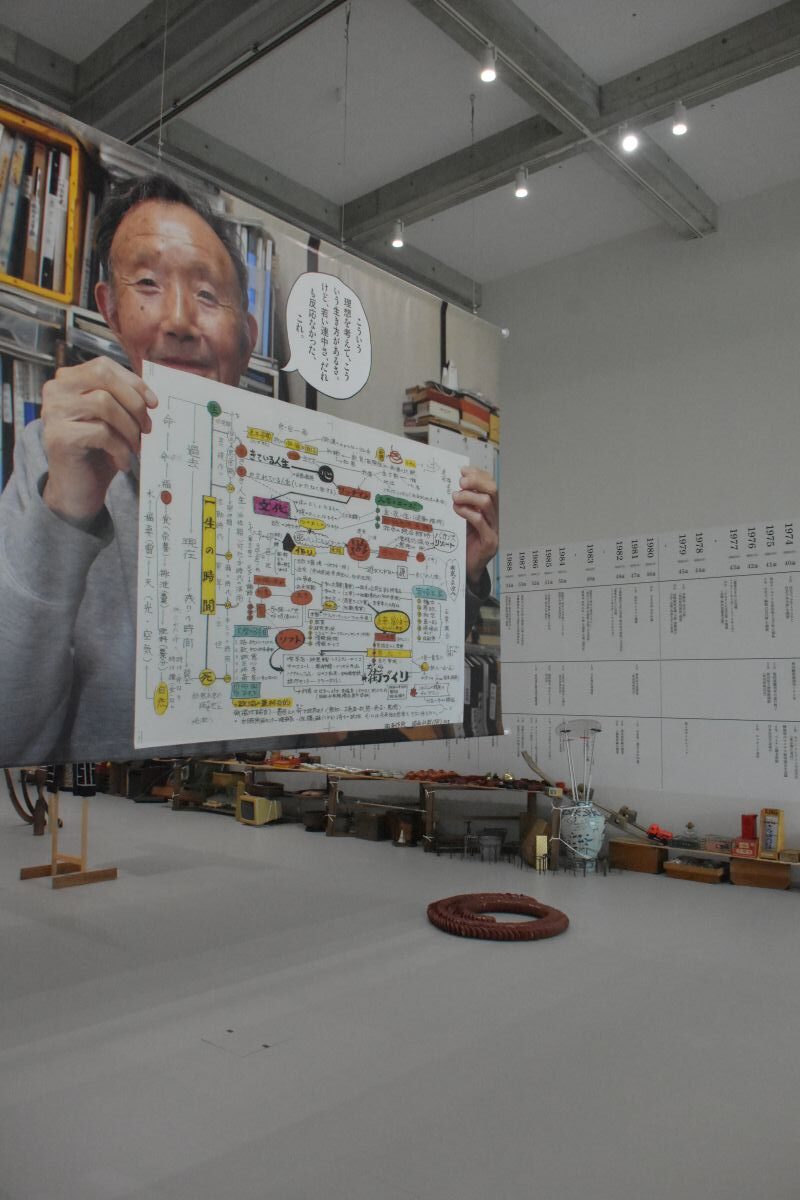
アウト・オブ・民藝(軸原ヨウスケ、中村裕太)は、油谷さんから手渡された《人生観図》(1985年)を起点に、そこに潜む蒐集の心得を読み解きます。さらに、郷土版画家・勝平得之の木彫との出会いを語る油谷さんの声を重ね、その思考と言葉の森へと観客を誘います。
▼アウト・オブ・民藝のユートピアだより(前編)
▼アウト・オブ・民藝のユートピアだより(後編)
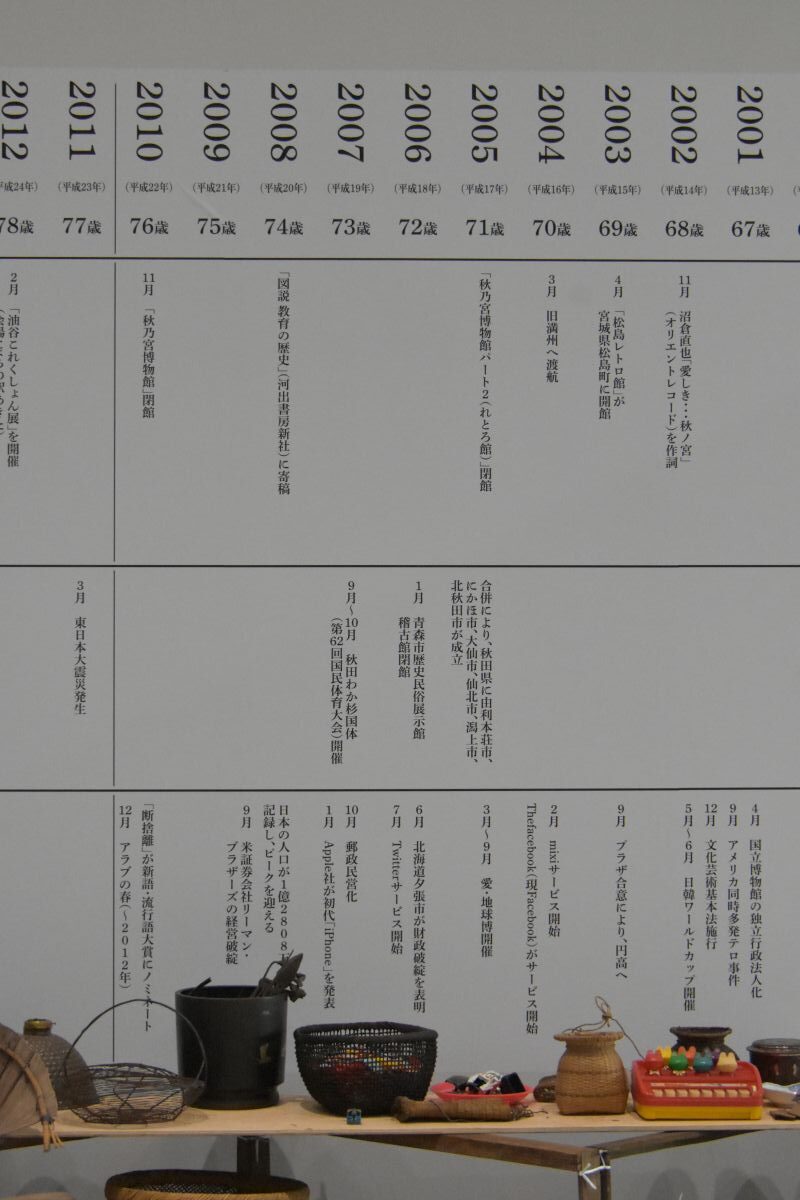
会場ではこのほか、アウト・オブ・民藝、イタイミナコ、内田聖良、身体0ベース運用法(安藤隆一郎)による作品展示や、油谷さんの90年以上にわたる人生と蒐集の歩みを、秋田、東北、日本、世界の出来事と重ねた年表も展示しています。個人による蒐集が、社会や暮らしの変化とどのように結びついてきたのかをたどることができます。
Expressions Born from Encounters with the Collection
Since 2022, Hiroyuki Hattori has conducted more than ten interviews with Mr. Aburaya. Through Mr. Aburaya’s words, newly commissioned photographs by Iwane Ai, and the story of his decades-long collecting practice, Hattori connects the life of a single collector with the challenges facing museums and archives today.
Satoshi Kunimasa focused on the woven and braided objects he encountered through the “1/1000 Aburaya Collection” project. By closely observing everyday tools woven from natural materials and translating their techniques and structures into contemporary materials, he creates works that connect traditional handcraft with life today. Using discarded plastic packaging and the technique of sakiori weaving, he created a hanten coat in the same form as the one once worn by workers at Aburaya Shoten, the rice-grain store run by Aburaya’s family.
Kosuke Yamagishi and Ayaka Seto visited Aburaya’s warehouse in Akita and documented its interior and the vast number of objects stored there through film. Their footage captures the stillness and density of the warehouse, as well as the time Aburaya spends surrounded by these objects. The work allows visitors in Kyoto to experience something of the atmosphere of the place where the collection has long been kept.
Out of Mingei (Jikuhara Yosuke and Nakamura Yuta) take Aburaya’s Jinseikan-zu (Diagram of a View of Life) (1985) as the starting point for exploring his philosophy of collecting. Combining the diagram with Aburaya’s account of finding a long-sought wood carving by Akita printmaker Katsuhira Tokushi.
Also on view are works by Itai Minako, Uchida Seira, and Shintai-0-base-unyouhou (Ando Ryuichiro), along with a timeline tracing more than ninety years of Aburaya’s life and collecting practice alongside events in Akita, Tohoku, Japan, and the wider world. It allows visitors to explore how an individual’s collecting practice has intersected with broader changes in society and everyday life.
オープニングトークで共有された「問い」
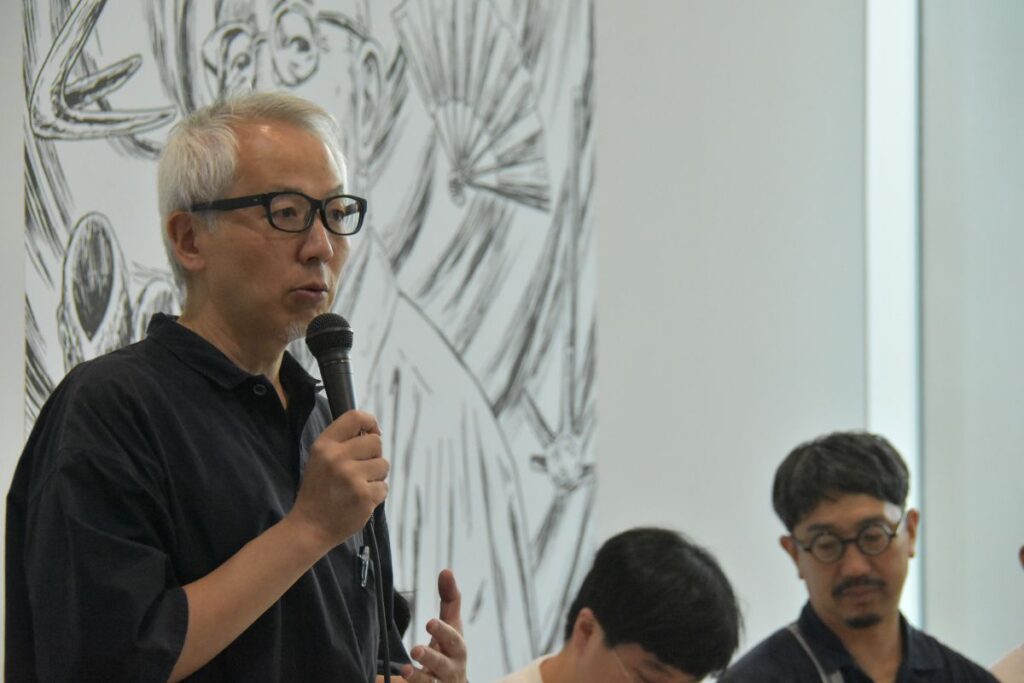
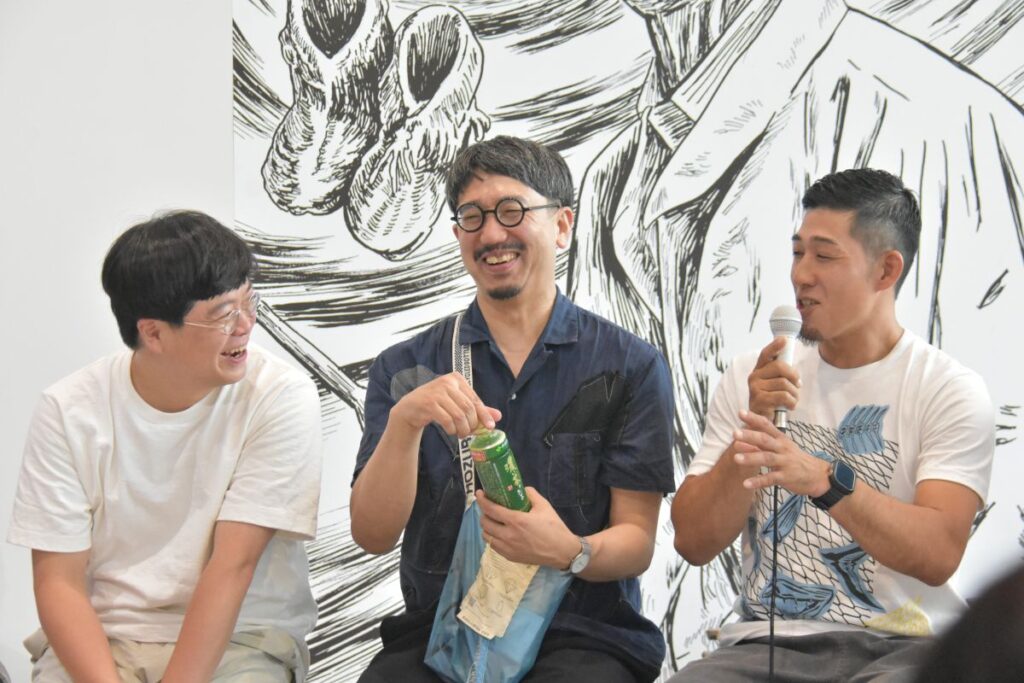
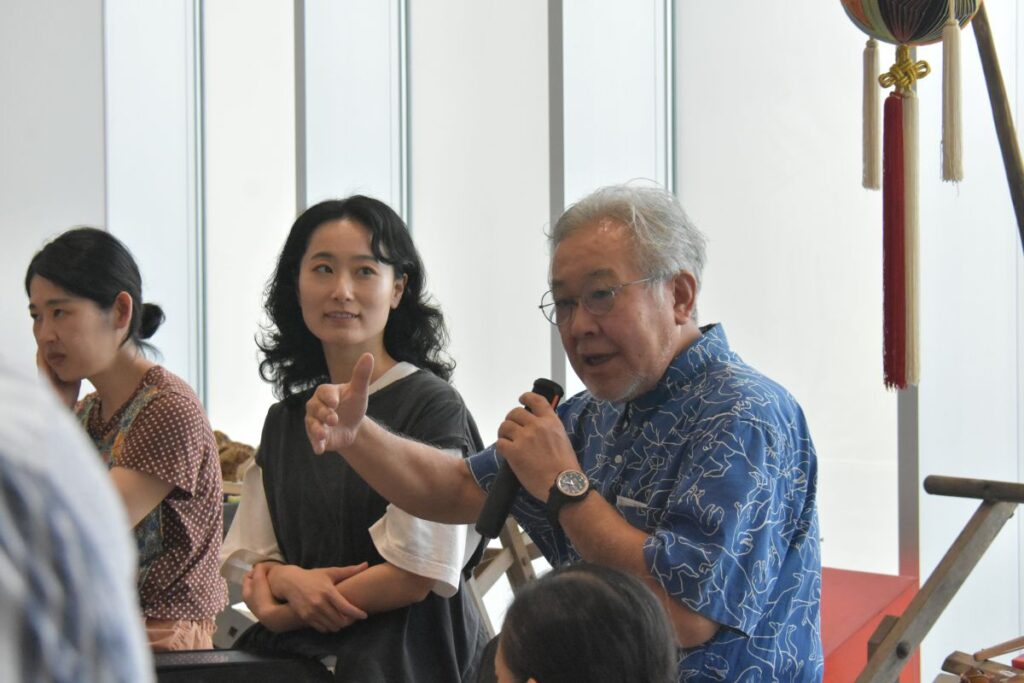
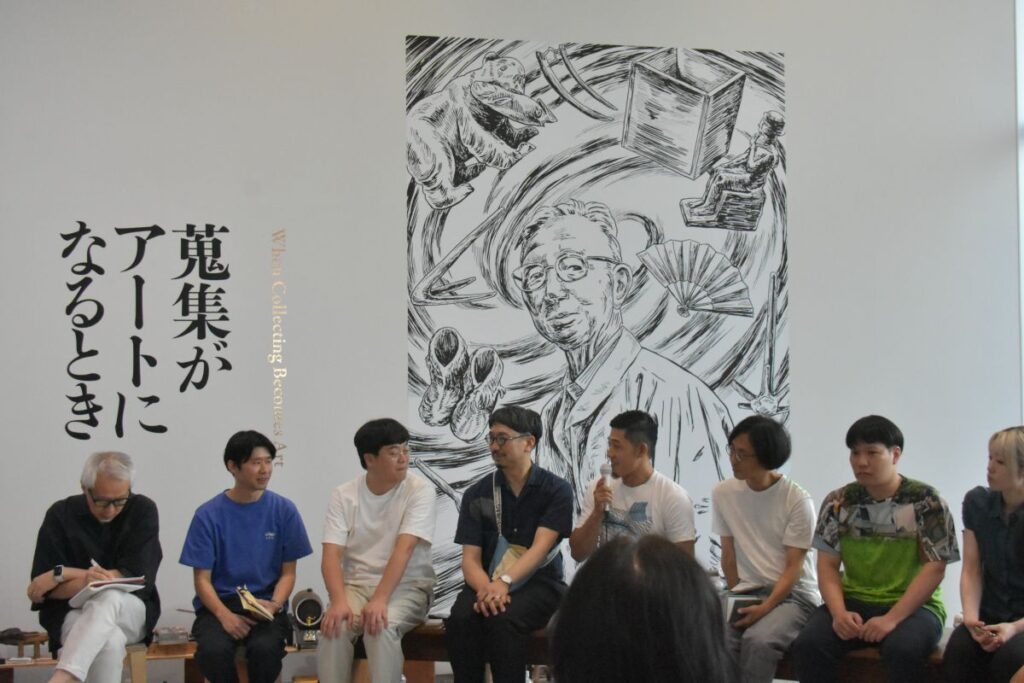
初日には、京都市立芸術大学芸術資源研究センターの佐藤知久さんを進行役に迎え、参加作家・研究者によるオープニングトーク「蒐集がアートになるとき―問いをひらく」(共催:京都市立芸術大学芸術資源研究センター)を開催しました。
トークでは、それぞれが油谷さんやコレクションとどのように出会い、何に驚き、どのような問いから制作や調査を始めたのかが紹介されました。
油谷コレクションには、すでに価値が定まったものばかりが集められているわけではありません。ほかの人が捨てたもの、用途がわからなくなったもの、現在の制度では収蔵や保存が難しいものも数多く含まれています。登壇者の話からは、そのようなものを安易に「価値がない」と判断せず、未来に開かれた状態で残しておくことの意味が浮かび上がりました。
また、膨大なコレクションを一人の蒐集家の所有物としてだけでなく、地域や社会に共有される文化資源として捉えられるのか、アーティストはその継承にどのように関わることができるのかといった議論も交わされました。
Questions Shared during the Opening Talk
On the opening day, we held the talk “When Collecting Becomes Art: Opening Up Questions,” featuring the participating artists and researchers and moderated by Sato Tomohisa of the Archival Research Center at Kyoto City University of Arts. The event was co-organized by the Archival Research Center.
During the talk, each speaker described how they first encountered Aburaya and his collection, what surprised them, and the questions that led them to begin their artistic work or research.
The Aburaya Collection does not consist solely of objects whose value has already been established. It also contains many things discarded by others, objects whose original uses are no longer known, and materials that are difficult to accession or preserve within existing institutional frameworks. The speakers’ accounts brought into focus the significance of not hastily judging such objects to be “without value,” but instead preserving them in a way that leaves them open to future possibilities.
The discussion also explored whether this vast collection could be understood not simply as the property of an individual collector, but as a cultural resource shared by the local community and society—and how artists might contribute to passing it on to future generations.
Information
展覧会「蒐集がアートになるとき When Collecting Becomes Art」
■会期: 2026年7月25日(土)~8月23日(日) 10時~18時
※休館日 月曜日、8月15日(土)、8月16日(日)
■会場: 京都市立芸術大学ギャラリー@KCUA(京都市下京区下之町57-1 京都市立芸術大学 C棟1階)
■主催: 京都市立芸術大学(2026年度京都市立芸術大学ギャラリー@KCUA申請展)、NPO法人アーツセンターあきた、民具とアートとアーカイブの研究所(民具ラボ)
■参加作家: 油谷満夫、國政サトシ、服部浩之、藤浩志、アウト・オブ・民藝(軸原ヨウスケ、中村裕太)、安藤隆一郎、イタイミナコ、岩根愛、内田聖良、山岸耕輔・瀬戸彩花
■メインビジュアル:尾花賢一
■デザイン:越後谷洋徳
■協力: 京都市立芸術大学美術学部同窓会象の会
■助成: 公益財団法人小笠原敏明記念財団、公益財団法人野村財団
■後援: 秋田公立美術大学、秋田魁新報社、CNA秋田ケーブルテレビ、日本民具学会
入場無料
■Dates: July 25 (Sat.), 2026 – August 23 (Sun.), 2026; 10:00 – 18:00
*Closed onMondays; August 15 (Sat.) and August 16 (Sun.)
■Venue: Kyoto City University of Arts Gallery @KCUA
(Kyoto City University of Arts Building C 1st Floor, 57-1 Shimono-cho, Shimogyo-ku, Kyoto, 600-8601 Japan)
■Organized by: Kyoto City University of Arts (2026 Kyoto City University of Arts Gallery @KCUA Open Call Exhibition); The Research Institute for Folk Tools, Art and Archives (Mingu Lab); Arts Center Akita
■Participating artists: Michio Aburaya; Satoshi Kunimasa; Hiroyuki Hattori; Hiroshi Fuji; Out of Mingei (Yosuke Jikuhara, Yuta Nakamura); Shintai 0 base unyouhou (Ryuichiro Ando); Minako Itai; Ai Iwane; Seira Uchida; Kosuke Yamagishi; Ayaka Seto
■Main visuals: Kenichi Obana
■Design: Hironori Echigoya
■In cooperation with: The Alumni Association of Kyoto City University of Arts
■Funding support from: Toshiaki Ogasawara Memorial Foundation; Nomura Foundation
■Supported by: Akita University of Art; Akita Sakigake Shimpo; CNA Akita Cable Television; The Society for Mingu of Japan
Free admission